Piston Compressors
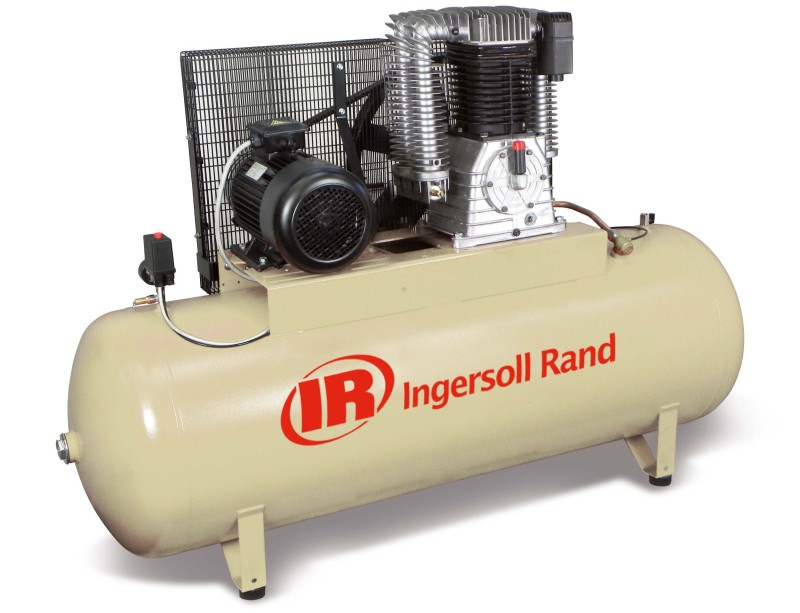
- Low-pressure piston compressors
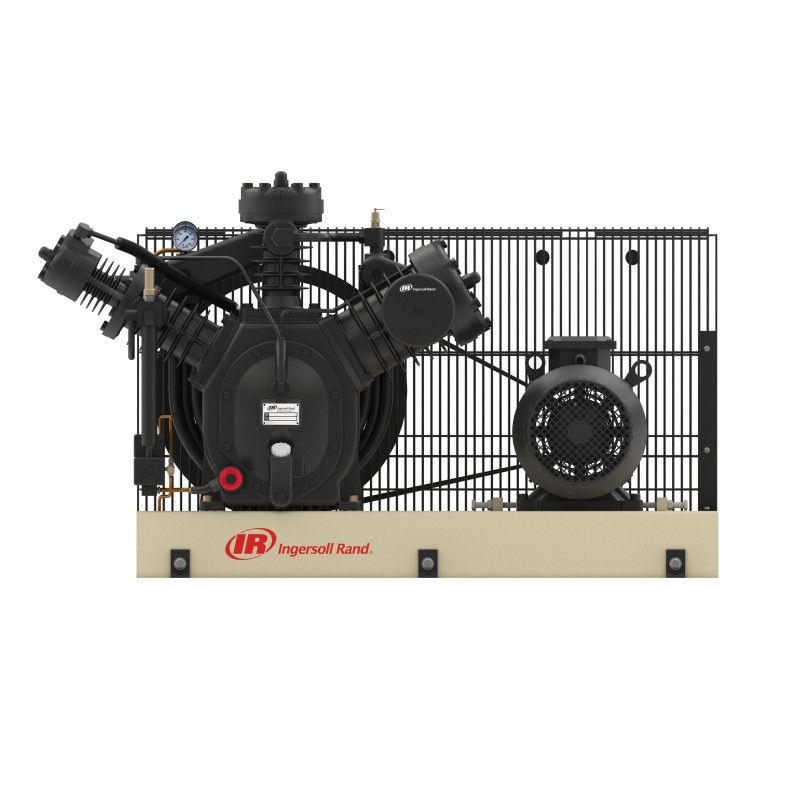
- High-pressure compressor Model T-30
Reciprocating or piston compressors use pistons instead of screws, as in rotary screw compressors, to produce compressed air. Their operation is similar to that of a car’s internal combustion engine —and some models are even powered by gasoline, although most are electrically driven.
When the piston moves downward, air is drawn into the cylinder, and when it moves upward, the air is compressed and then expelled toward a receiver tank, where it is stored.
In this case, the air flow is not constant and continuous as in screw compressors, but rather generated in pulses corresponding to the piston’s movements. For this reason, the use of an air receiver tank is generally necessary to accumulate and regulate the compressed air produced.
Their design is aimed at applications requiring a lower air demand, and they are widely used for small professional applications mainly due to their advantages: lower cost, compact size (easy to transport), long service life, simple maintenance, and a wide operating pressure range (both low and high).
Reciprocating or piston compressors can therefore be found in both low-pressure and high-pressure versions.